
Custom Home Builder Essendon Tips: A 2026 Planning Guide
Table of Contents
- Custom Home Builder Essendon Tips: Start With a Site Reality Check
- Questions to Ask Custom Home Builders Before You Sign
- The Custom Home Building Process Steps, Explained Plainly
- Custom Home Construction Budget Tips for 2026
- Choosing a Custom Home Builder: What Actually Matters
- Common Mistakes to Avoid During a Custom Build
- Conclusion: Turning Plans Into a Home You’ll Keep
- Frequently Asked Questions
Last Updated: 4 October 2026
Custom Home Builder Essendon Tips: Start With a Site Reality Check
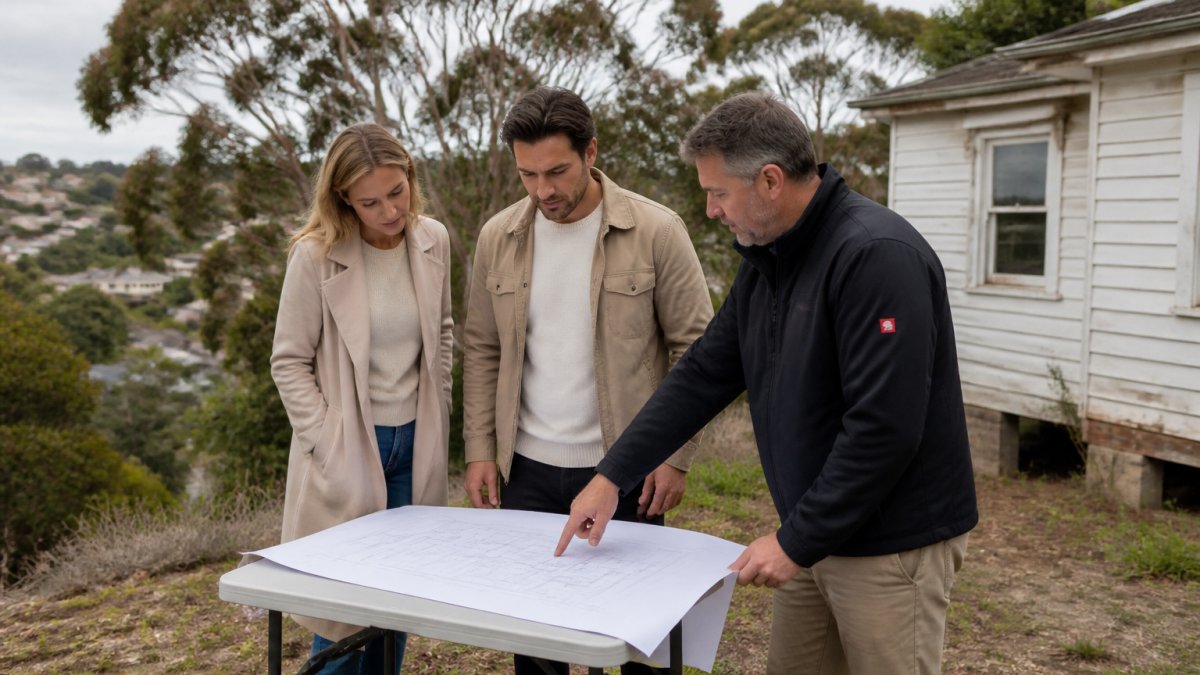
Before you fall in love with a floor plan, walk the block. Custom home builder Essendon tips start with the ground under your feet, not the showroom. At Archibuilt, we have spent over 12 years building and renovating homes across Melbourne, and the site decides more than most people realise. Essendon’s older suburbs are full of sloping blocks, mature trees and narrow frontages. Each one changes what you can build.
A custom home builder is a licensed construction professional who designs and builds a home to your brief on your specific block, rather than selling a fixed design from a catalogue. That difference matters on an awkward site.
Why Older Suburban Blocks Change the Build
Older blocks rarely suit off-the-shelf designs. A fall of a metre or two across the site affects drainage, slab type and driveway access. Large trees bring root protection zones and council permit conditions. Narrow side access limits what machinery can reach the rear yard. None of these are deal-breakers. They are costs and constraints you need to know about before you sign anything.
So ask any builder how they handle slope, trees and tight access. The answer tells you plenty.
Questions to Ask Custom Home Builders Before You Sign
The best questions to ask custom home builders are the ones that expose how they handle money, time and change. Ask them early, before deposits. A confident builder will welcome them.
Start with these:
- Who manages my project day to day, and can I contact them directly?
- What is excluded from this quote, and what usually blows out?
- How do you price variations once work starts?
- What happens if we change our minds mid-build?
- Can I see homes you have finished, not just plans?
The Money and Timeline Questions Most People Forget
Most people ask about price per square metre. Fewer ask what happens when the ground turns out to be rock, or when a council request adds weeks. Ask how delays are handled and who wears the cost. Ask for a written process for variations. Ask what a realistic handover date looks like, not a best-case one.
The biggest mistake we see is signing a quote that lists inclusions but no exclusions. If the contract does not spell out what is not included, every gap becomes a surprise bill later.
The Custom Home Building Process Steps, Explained Plainly
The custom home building process steps run from brief to handover in a set order. Skipping a step costs more later. Here is how it flows.
- Brief and budget: agree what you want and what you can spend.
- Site review: check slope, soil, trees and access.
- Design and drawings: turn the brief into plans.
- Approvals: lodge planning and building permits with council.
- Fixed contract: lock scope, price and timeline in writing.
- Construction: build in stages, with inspections along the way.
- Handover: final inspection, keys and warranty documents.
| Stage | What Happens | Typical Duration |
|---|---|---|
| Brief and budget | Agree scope and spend | 1-2 weeks |
| Design | Drawings and selections | 4-10 weeks |
| Approvals | Council and building permits | 6-12 weeks |
| Construction | Build to lock-up, then fit-out | 6-12 months |
| Handover | Final inspection and keys | 1-2 weeks |
Timelines vary with council workloads and how quickly you make selections.
Custom Home Construction Budget Tips for 2026
Custom home construction budget tips come down to one habit: hold a contingency. Set aside a buffer for the unknowns a site review cannot fully predict, such as hidden rock or extra engineering. It is the single best protection against mid-build stress.
Also:
- Lock your selections early so variations stay low.
- Compare quotes on scope, not headline price.
- Ask for a staged payment schedule tied to progress.
- Keep a written record of every change and its cost.
We recommend clients finalise tiles, tapware and cabinetry before construction starts. Late selections are the quiet budget killer, because rushed choices often mean rework and extra trades on site.
Choosing a Custom Home Builder: What Actually Matters
Choosing a custom home builder comes down to trust, proof and clear communication. Price matters, but it is not the top signal. Look for a builder who explains things in plain English, shows finished work, and puts everything in writing.
Use this checklist:
- Current registration and insurance documents
- Two or three recently completed homes you can visit
- A written scope with clear exclusions
- A named contact for your project
- A clear variations process
- Warranty and defect terms in writing
Homeowners who want a jargon-free process and a builder who explains each stage in plain English, rather than pushing a standard design.
Common Mistakes to Avoid During a Custom Build
The common mistakes during a custom build are predictable, and almost all of them are avoidable. The first is choosing on price alone. The cheapest quote often hides the most exclusions.
Others to watch:
- Changing your mind after lock-up, when changes cost the most.
- Skipping the site review to save time.
- Not reading the contract properly.
- Making selections late and holding up trades.
A good builder will flag these before they happen. If yours does not, ask why.
Conclusion: Turning Plans Into a Home You’ll Keep
A custom build rewards planning, not speed. Get the site checked, ask the hard questions, hold a contingency and put everything in writing. That is how a set of drawings becomes a home you actually want to keep.
At Archibuilt, we handle the whole journey, from first design through to construction and the finishing touches. Our team brings more than 12 years of experience to new builds and major renovations, and we keep the process straightforward and jargon-free. If you want a builder who listens to your vision, get a quote from Archibuilt and start with a site reality check.
Frequently Asked Questions
What should I look for when hiring a custom home builder?
Look for a current builder registration, domestic building insurance for your project value, and a written contract that itemises what is and isn’t included. Ask how many similar homes they have completed in the past two years and whether you can visit one. Check that variations, progress payments and defect rectification are spelled out in plain English. A builder who answers these questions without hesitation is usually the one worth shortlisting.
How long does the custom home building process typically take?
Most custom builds run through five stages: briefing and feasibility, design and documentation, permits and approvals, construction, and handover. Design and approvals often take as long as construction itself, especially where a planning permit is needed. Ask each builder to break the timeline into these stages in writing, with the approval period shown separately, so you can see where the real waiting time sits before you commit.
What custom home construction budget tips actually make a difference?
Set a contingency of at least 10 per cent and treat it as untouchable. Lock in your selections before construction starts, because changes made on site cost more and delay trades. Ask for a costed schedule of finishes rather than a single lump sum, and confirm how variations are priced and approved. Review the budget at each stage instead of waiting until the end, when your options are limited.
What are the common pitfalls to avoid during a custom home build?
The most frequent problems are approving a design before checking what the site and local planning rules allow, choosing a builder on price alone, and leaving selections until the last minute. Others include paying large deposits before work begins and not documenting verbal agreements. Get every change in writing, keep a single point of contact, and ask for progress updates on a fixed schedule so small issues are caught early.