
How to Find Reliable Home Builders: A Vetting Guide
Table of Contents
- How to Find Reliable Home Builders: What You Need to Know
- Check Licences, Insurance, and Credentials
- Questions to Ask a Home Builder Before You Hire
- How to Check a Builder’s References and Past Work
- Compare Home Builder Quotes Accurately
- Home Building Contract Checklist: What to Look For
- Red Flags to Spot Before You Sign
- Frequently Asked Questions
Last Updated: October 11, 2026
How to Find Reliable Home Builders: What You Need to Know
Finding a reliable home builder is one of the most important decisions you’ll make. The wrong choice can cost you thousands of pounds, months of delays, and endless stress. At Archibuilt, we’ve helped Melbourne homeowners navigate this process for over 12 years.
The challenge isn’t finding builders. It’s finding the right one. Most homeowners rush this step. They pick a name from Google, get a quote, and sign. Then the problems start: hidden costs, missed deadlines, poor workmanship, communication breakdowns.
This guide walks you through how to find reliable home builders step by step. We’ll show you exactly what to check, what questions to ask, and what red flags to spot before you sign anything.
Check Licences, Insurance, and Credentials
Your first move is to verify that a builder is actually licensed to do the work. This isn’t optional. It’s your legal protection.
In Australia, home builders must hold a valid building licence issued by their state’s building regulator. Ask for the licence number and check it online. Most state regulators publish searchable databases where you can verify current status.
Ask for proof of these three things:
- Current building licence (active, not expired)
- Public liability insurance (minimum $20 million cover for residential work)
- Professional indemnity insurance (covers design and planning errors)
Request certificates directly from the builder. Don’t accept promises to “get them later.” A legitimate builder has these documents ready. If they hesitate or make excuses, move on.
Also check whether the builder is registered with a professional body like the Housing Industry Association or Master Builders Association. Membership isn’t mandatory, but it signals accountability. These bodies have dispute resolution processes if things go wrong.
Never accept a verbal assurance that a builder is insured. Insurance lapses happen. Get written proof dated within the last 30 days. A builder without current insurance puts your entire project at financial risk.
Questions to Ask a Home Builder Before You Hire
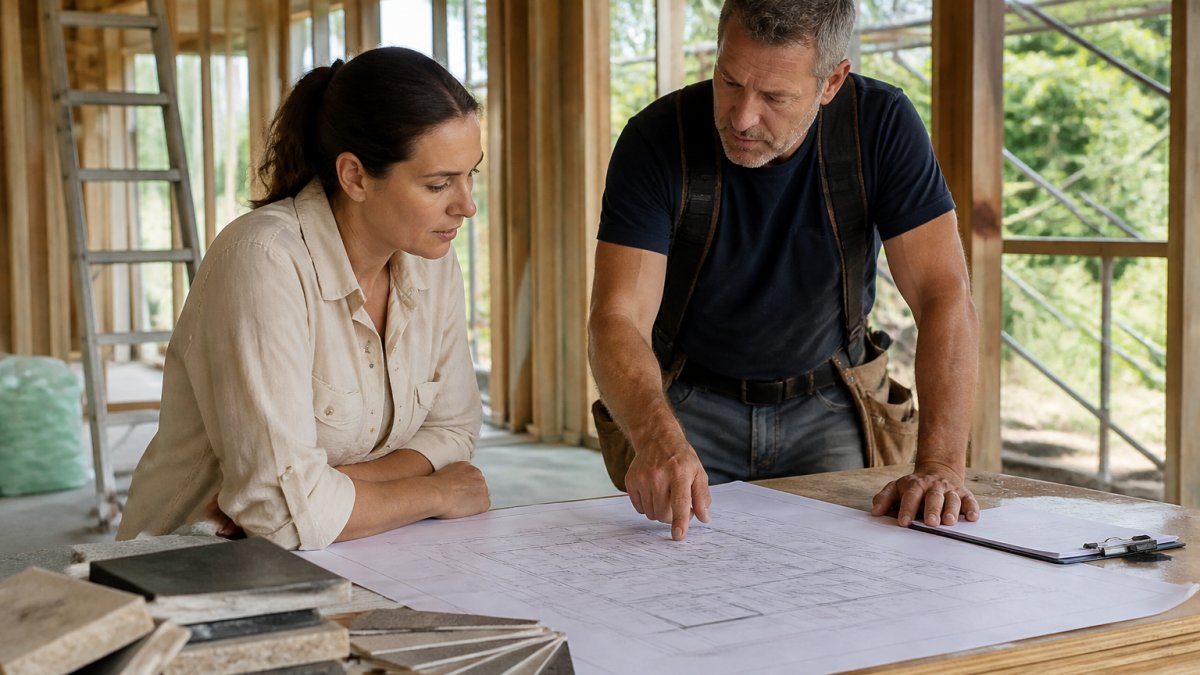
The right questions reveal how professional a builder is and whether they understand your vision. Ask these before you commit:
About their experience and track record:
- How long have you been building homes in this area?
- How many projects similar to mine have you completed?
- Can you provide references from homeowners I can contact directly?
About your specific project:
- Walk me through how you’d approach this build from start to finish
- What’s your timeline estimate, and what could delay it?
- How do you handle changes once work has started?
About communication and transparency:
- How often will we meet during the build?
- Who’s my main point of contact if issues arise?
- How do you communicate progress and any problems?
About costs and contracts:
- What’s included in your quote and what’s not?
- How do you handle cost overruns?
- What’s your payment schedule?
Pay attention to their answers. A builder who listens and asks clarifying questions about your needs is usually more reliable than one who rushes through to close the deal. If they’re vague about timelines or dismissive of your concerns, that’s a warning sign.
Ask the same questions to multiple builders. Compare not just their answers but how they answer. The builder who takes time to understand your project usually delivers better results than one who treats every build as identical.
How to Check a Builder’s References and Past Work
References are where theory meets reality. A builder’s website might look polished, but what do actual homeowners say?
Ask for at least three references from completed projects similar to yours. Contact them directly by phone, not email. Ask:
- Did the builder finish on time and on budget?
- How was communication throughout the project?
- Were there any quality issues? How were they handled?
- Would you hire them again?
Ask the builder if you can visit a completed project in person. Seeing finished work tells you far more than photos. Look at the details: are corners cut? Is the finish quality consistent? Do fixtures and fittings look well-installed?
Check online reviews on Google, Facebook, and industry sites. Read both positive and negative reviews. One bad review isn’t necessarily a deal-breaker, but patterns matter. If multiple reviews mention poor communication or unfinished work, that’s telling.
Also search the builder’s name with terms like “dispute,” “complaint,” or “legal.” This isn’t foolproof, but it can surface serious issues. Check whether the builder has had complaints lodged with building regulators or consumer protection bodies.
A builder with glowing references from recent projects and consistent positive reviews is far more likely to deliver quality work than one with few references or mixed feedback.
Compare Home Builder Quotes Accurately
Three quotes from different builders will rarely match. The lowest price isn’t the best deal. You’re comparing apples to oranges if the quotes aren’t detailed the same way.
Ask each builder for an itemised quote that breaks down:
- Labour costs
- Materials and supplies
- Subcontractor fees
- Permits and approvals
- Contingency allowance (usually 5-10% for unforeseen issues)
Compare the same line items across quotes. If one builder’s quote is significantly lower, ask why. Are they using cheaper materials? Have they underestimated labour? Are permits and insurance included?
Watch for vague line items like “miscellaneous” or “contingencies.” These hide costs that could balloon later. A detailed quote protects you.
Also compare the scope of work. Does each quote cover the same things? One builder might include site clean-up; another might charge extra. These differences explain price variations.
| Element | Builder A | Builder B | Builder C |
|---|---|---|---|
| Labour | $45,000 | $48,000 | $42,000 |
| Materials | $35,000 | $36,000 | $34,000 |
| Permits | $2,500 | $2,500 | $1,800 |
| Contingency (5%) | $4,125 | $4,325 | $3,890 |
| Total | $86,625 | $90,825 | $81,690 |
Don’t choose solely on price. A builder $5,000 cheaper might cut corners or disappear if costs rise. Choose the builder whose quote is detailed, competitive, and backed by solid references.
Home Building Contract Checklist: What to Look For
A contract protects both you and the builder. Never start work without a signed agreement. Before you sign, check that it includes:
Project scope:
- Detailed description of all work to be completed
- Specific materials and finishes (brands, colours, quality grades)
- Site plans and architectural drawings attached
Timeline:
- Start and completion dates
- Milestones and payment triggers
- Consequences for delays (liquidated damages clause)
Payment terms:
- Total contract price
- Payment schedule (usually staged: deposit, progress payments, final payment)
- What triggers each payment
Changes and variations:
- How changes to the scope are approved and priced
- Whether changes require written agreement
- How disputes over costs are resolved
Insurance and liability:
- Confirmation that the builder carries public liability and professional indemnity insurance
- Who’s responsible if someone is injured on site
- What happens if materials are damaged
Warranties:
- Length of structural warranty (typically 6-10 years)
- What’s covered: workmanship, materials, defects
- How defects are reported and remedied
Dispute resolution:
- Process for handling disagreements
- Whether disputes go to mediation before court
- Timeframes for resolving complaints
Have a solicitor review the contract before you sign. Don’t skip this step.
Never sign a contract that’s blank or incomplete, or one that doesn’t match the quote you agreed to. Vague contracts are how builders justify unexpected charges later.
Red Flags to Spot Before You Sign
Some warning signs appear before work even starts. Pay attention to them.
Red flag: The builder demands a large upfront payment.
Legitimate builders ask for a deposit (usually 10-20%) to secure materials and schedule. If they want 50% upfront, they’re either financially unstable or planning to use your money on other projects.
Red flag: They won’t provide references or avoid questions about past projects.
Builders with nothing to hide share their work freely. Evasiveness suggests they have something to hide.
Red flag: The quote is suspiciously low.
If a quote is 20-30% cheaper than others, ask why. Cheap often means corners cut, substandard materials, or hidden costs added later.
Red flag: They pressure you to decide quickly.
“This price is only good today” or “I have another client waiting” are high-pressure tactics. A reliable builder respects your timeline and doesn’t rush major decisions.
Red flag: The contract is vague about scope, timeline, or costs.
Vague contracts are intentional. They give the builder wiggle room to change terms, add charges, or extend timelines without consequence.
Red flag: They’re difficult to reach or don’t respond to messages.
If communication is poor before work starts, it’ll be worse during the build. A builder who takes days to respond to emails won’t prioritise your concerns on site.
Red flag: They have no physical office or permanent address.
Legitimate builders have an office, even a small one. A builder operating only from a mobile phone is harder to hold accountable if problems arise.
Trust your instinct. If something feels off, it probably is. There are plenty of reliable builders. Don’t settle for one that makes you uneasy.
Finding a reliable home builder takes time and diligence, but it’s time well spent. The builders you’ve checked thoroughly, verified through references, and signed a detailed contract with are far more likely to deliver the quality and professionalism your project deserves. At Archibuilt, we believe transparency and clear communication are non-negotiable. When you work with a builder who listens to your vision, explains every step in plain English, and backs their work with genuine warranties, the entire experience transforms. Get a quote from Archibuilt today and see how a builder committed to seamless project delivery can bring your home vision to life.
Frequently Asked Questions
How do I check if a home builder is reliable?
Start by verifying their licence with the relevant building authority in your state, check their insurance coverage, and ask for references from recent clients. Visit completed projects if possible and speak directly to past customers about their experience. A reliable home builder will be transparent about timelines, costs, and their process. They should also provide a detailed written contract and be willing to answer all your questions without pressure.
What should I look for in a home building contract?
Your contract should include a detailed scope of work, fixed or clearly defined pricing with payment schedules, start and completion dates, warranty terms, and dispute resolution procedures. Check that it specifies who is responsible for permits, insurance, and site safety. The contract must outline what happens if changes are requested mid-project and any associated costs. Have a solicitor review it before signing to protect yourself.
How do I compare home builder quotes fairly?
Request quotes in writing that break down labour, materials, and overhead costs separately. Ensure all quotes cover the same scope of work so you’re comparing like with like. Don’t automatically choose the cheapest option, as quality and reliability matter more. Ask about timeline, warranty coverage, and payment terms. Request references for each builder and check them thoroughly before making your decision.
What are the biggest warning signs when choosing a home builder?
Be cautious of builders who pressure you to decide quickly, ask for large upfront payments, or avoid putting agreements in writing. Avoid those unwilling to provide references or show completed work. Red flags include vague pricing, no clear timeline, unlicensed staff, or reluctance to discuss their process. Trust your instincts if a builder doesn’t communicate clearly or seems evasive about costs and timelines.